
Blogging in 2027: Dead, Alive, or Just Being Done Completely Wrong?

Blog posts started out as ways to tell stories. Ironically, they’ve come full circle and are once again tools to connect with audiences on a deeper level.
Note: This is an updated version of an older write-up If you’d like to compare what we said in 2025 versus our take today, check out our older post: “Blogging in 2025: Are Blogs Still Relevant?”
It’s that time of year again where we look ahead and try to predict the future. Will 2027 be the year AI takes over? Will flying cars blot out the sun and take over the skyline?
The answers to those questions (and more) are likely “No” and “No”, but there’s an even more pressing question on the minds of marketing directors, CEOs, and generally anyone who’s trying to improve visibility and brand trust in 2027: Is blogging still relevant?
Funeral for a Friend…Again
Much like SEO, blogging has been declared "dead" more times than we can count. Ironically, you can find countless blog posts about this very topic.
And yet, here we are. Established B2B organizations, industry authorities, and modern brands are still creating blog content and still seeing massive pipeline impact.
So, the big question remains: Why?
If blogging has bit the dust (for real this time), should you even bother with blogging as part of your SEO strategy in 2027?
Short answer? Yes, but only if you abandon the old playbook.
If your idea of blogging is churning out surface-level, 800-word articles to target a single keyword, you're wasting time and resources. But if you view your blog as the strategic core of a multi-channel media ecosystem, it remains one of the most powerful assets you own.

Dynamic content in the form of blog posts and long-form articles continues to prove its value in the face of Retrieval-Augmented Generation (RAG)
How Blogging Has Evolved Over the Years
Before looking into our crystal ball to predict the future of blogging, it’s important to understand how we got here. We practice what we preach, so there’s no sense in boring you with a drawn-out history lesson for the sake of filling the page, but understanding the shift in the utility of blogging explains where the value lies today.
Back in the 1990s, web logs (or "blogs") started on platforms like GeoCities, Angelfire, and LiveJournal. We know because we were there.
They were personal online diaries with zero commercial intent. Truthfully, this was mostly because online payment processing hadn’t been fully fleshed out yet.
How Blogs Went from Personal Diaries to Commercial Assets
As search engines grew in sophistication, the search engine optimization (SEO) industry was born. Marketing professionals realized blogs offered a way to continuously publish fresh, keyword-rich content to get indexed without cluttering a company's main transactional service pages.
By the mid-2000s, blogging became the primary engine for organic search discovery because it helped to steer search engine results.

Black hat SEO tricks can improve site visibility for a short time, but the penalties from Google and other search engines often comes swiftly.
The Double-Edged Sword of SEO Tricks
When CCM Founder Andrew Rusnak got into digital marketing back in 2010, the industry was heavily focused on keyword stuffing, spammy backlinks, and "black hat" techniques designed to trick search engine crawlers.
The goal was simple: flood blog posts with repeated keywords to artificially inflate rankings, even if the content offered no real value to a human reader.
Google responded with a series of major algorithm overhauls to penalize low-value content and reward actual substance. This marked the very first time blogging was declared "dead." Instead of dying, blogging just gained sophistication, forcing brands to really start focusing on quality and value.
The Changing Nature of Blogging in the AI Era
Fast forward to today, and we’ve got AI search tools doing a lot of the heavy lifting. Gone are the days when a blog could succeed as a basic keyword repository.
Today, top-of-funnel commodity content can be synthesized by AI in seconds. If your blog post merely summarizes basic industry definitions without adding an original perspective, AI will win that battle every time.

AI visibility for blog post citations is like the new roadside billboard. Even if engagement doesn’t lead to a conversion in the moment, the visibility and authority these engagements build leads to conversions down the road (no pun intended.)
AI Search is the New Roadside Billboard
The result is “zero-click searches”, or searches in which AI overviews provide the answer without earning a click to a website.
This can be a good thing and a bad thing.
It’s good because it filters out your competition that is still using the same tired tactics. It also promotes brand awareness and enhances visibility and authority. When your brand gets mentions in AI search results, even if you don’t get a click, you’re getting notoriety.
Think of it like a billboard on the side of the road. Most people aren’t going to pull over and call the number on the billboard right then and there, and they also likely won’t remember the number on the billboard to call later.
But, they will remember the company on the billboard, particularly if they see the billboard in passing each day during a commute.
Heading into 2027, blogging is entirely about authority, emotional resonance, and strategic media distribution.

Google still reigns supreme when it comes to overall search, but they aren’t the only game in town. Social search, video search, podcast search, and AI search tools have all made an impact.
People No Longer Just Use Google
While traditional search remains a primary discovery channel, buyers no longer rely on a single search bar. They research across social networks, video platforms, industry communities, and conversational AI search tools.
The other thing to note here is that buyers have voiced growing frustration with traditional search result pages cluttered with AI-generated fluff. When decision-makers want real answers, they look for authentic human experience, proven technical depth, and verified authority.
This means that they research deeper, and having a blog post cited in an AI answer can prompt a buyer to dig deeper.
How Search EVERYWHERE Optimization Is Redefining the Blog for 2027
Under a modern Search EVERYWHERE Optimization framework (the approach we take with each client relationship at Charlotte Content Marketing), your blog is no longer a resource that sits siloed off on its own. It serves as an authoritative resource for your entire digital ecosystem.
1. Feeding AI Models & RAG Architecture
Older search engine technology relied on indexes that were only updated periodically. Modern search infused with AI tools performs real-time retrieval-augmented generation (RAG).
When an AI search engine or tool like ChatGPT synthesizes an answer about your industry, it crawls long-form, authoritative blog posts and personalized technical articles to cite sources and summarize capabilities.
In order to be included in these results, your website, blog, and brand name need to be viewed as authoritative. If you aren’t publishing deep, original insights on a consistent basis, you run the risk of becoming invisible in AI-synthesized search results.

Getting blog content cited in AI search results and conversations with LLMs reinforces brand equity and helps to flesh out entities in knowledge graphs. This leads to greater brand authority and trust as well as visibility in your industry.
2. Reinforcing Brand Entities and Knowledge Graphs
Search engines evaluate organizations as "entities". In short, these are connected web nodes of verified information about who you are, what you do, and whom you serve.
They then build a knowledge graph. This is essentially what a search engine or AI tool “knows” about your brand.
Comprehensive blog posts that address complex industry problems solidify your knowledge graph built around the entities that make up your brand. In a nutshell, you’re building topical authority in the eyes of search algorithms.
3. De-Risking the Buyer Relationship
You already know this, but it’s worth noting: High-stakes B2B purchasing decisions aren't made on a whim.
Before an executive team signs off on a proposal, they audit your site and as many online resources as they can get their hands on. A blog filled with real-world project breakdowns, subject-matter expert insights, and operational transparency de-risks the sales decision by proving your team actively executes at a high level.
Reminder: If AI Can Synthesize It, It’s Not Worth Producing
Now, let’s get real for a second. Generative AI can spit out text at lightning speed, and for general purposes, it’s good enough.
To make blogging work in 2027, your content has to be able to offer what AI can’t replicate:
Real-World Operational Truths: Share actual client scenarios, technical nuances, and lessons learned from the field.
Firsthand Perspective: Use a clear, uncompromising voice. How does your firm view the industry? Why do you do things differently? A consistent, cohesive voice and narrative cuts through the generic, polished AI clutter.
Aesthetic & Multimedia Richness: Nobody likes being greeted with a wall of text, and truth be told, no one reads that junk anyway. An effective blog post needs to be a media-rich hub that incorporates video snippets, podcast clips, custom images, and skimmable structuring.
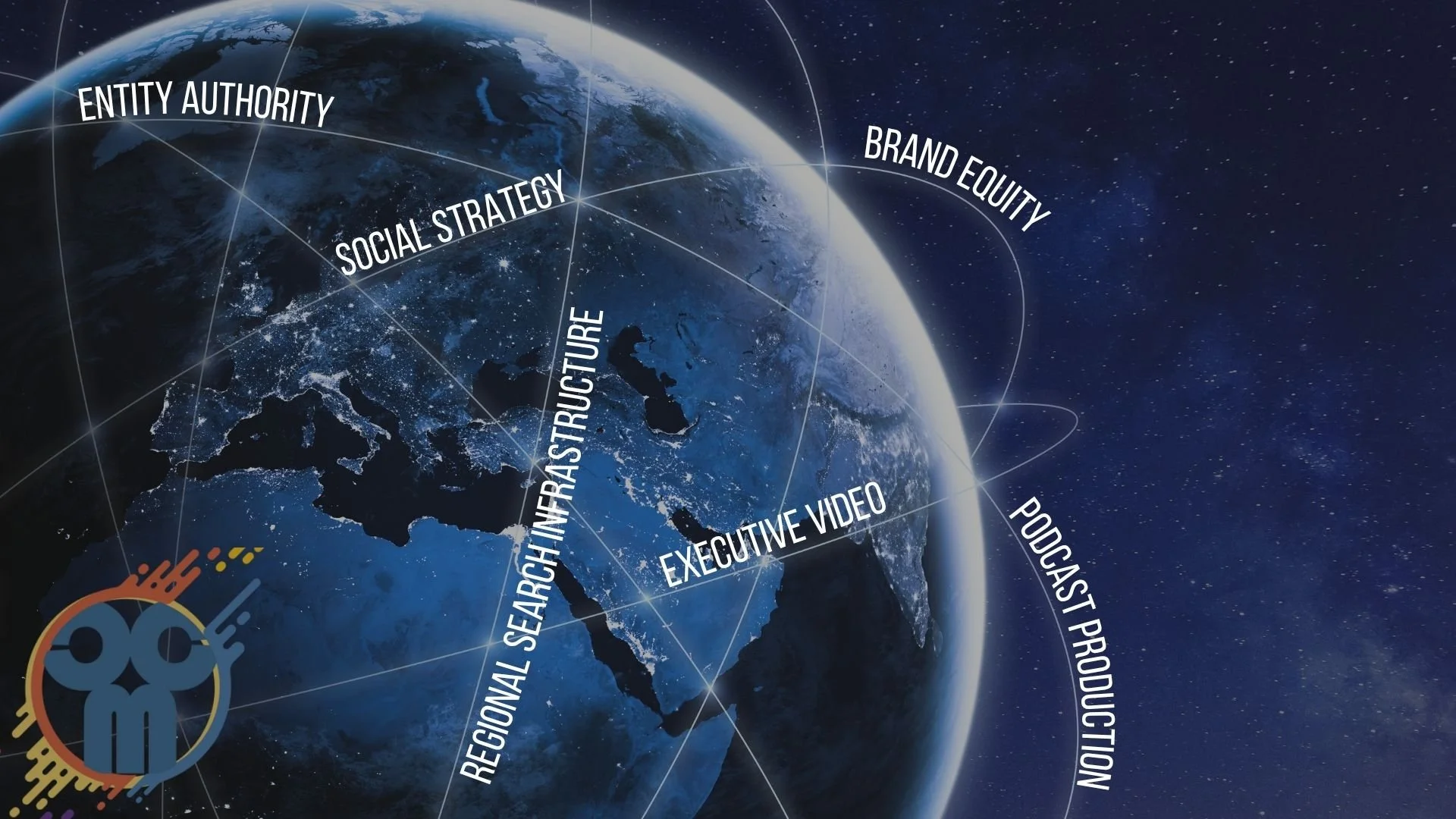
Maintaining multiple distribution vectors for your content infrastructure means not only showing up where your buyers are but also building a cohesive narrative with search tools and AI.
One Core Pillar, Multiple Distribution Vectors
We’ve talked about content repurposing for years in the marketing industry. Essentially, taking a blog post and making it a video topic or creating a podcast episode out of a social media post.
Repurposing content is still a good idea, but beyond that, we need to think about how threads ties everything together. In other words, we need a cohesive narrative.
Develop a Brand Narrative: Are you the tech-forward brand? Are you the people-centric brand? Are you the hometown choice?
Develop a Brand Voice: Do you speak plainly? Do you use aspirational language? Do you use symbolism and allegories?
Create Narratives Around These Elements: All of your branded content should weave in these elements. Tell stories using your narratives and voice so that all blogging content sounds authentically “you”.
When your messaging is unified across all channels, including your blogging, your target audience hears the exact same authoritative story no matter where they interact with your brand. They develop an affinity for your brand and know exactly what to expect from you.
The same goes for search engines and AI discovery tools. They, too, come to understand your brand, and this gives them the data they need to surface your brand for relevant queries from your ideal buyers.
Final Verdict: Is Blogging Still Relevant for 2027?
Blogging has simply grown up. Instead of thrashing around in the ether of cyberspace, blog posts are now a refined part of a Search EVERYWHERE Optimization content strategy.
Looking ahead to 2027, blogging is no longer about chasing superficial page views or ranking for low-intent keywords. It is about shaping how buyers think and feel about your brand, establishing unassailable topical authority, and training search engines and AI models to recognize your business as an industry leader.
When done right, your blog becomes a powerful tool for de-risking buyer relationships and driving deal velocity.
Ready to Build an Authoritative Content Infrastructure?
At Charlotte Content Marketing, we help established organizations turn corporate expertise into high-impact media ecosystems. From Search EVERYWHERE Optimization and executive video production to strategic content development, we build media footprints that drive real business outcomes.
Contact Charlotte Content Marketing online today or call us at (704) 323-6762 to schedule a strategy session.
