
Customer Service as Content Marketing? Yes!
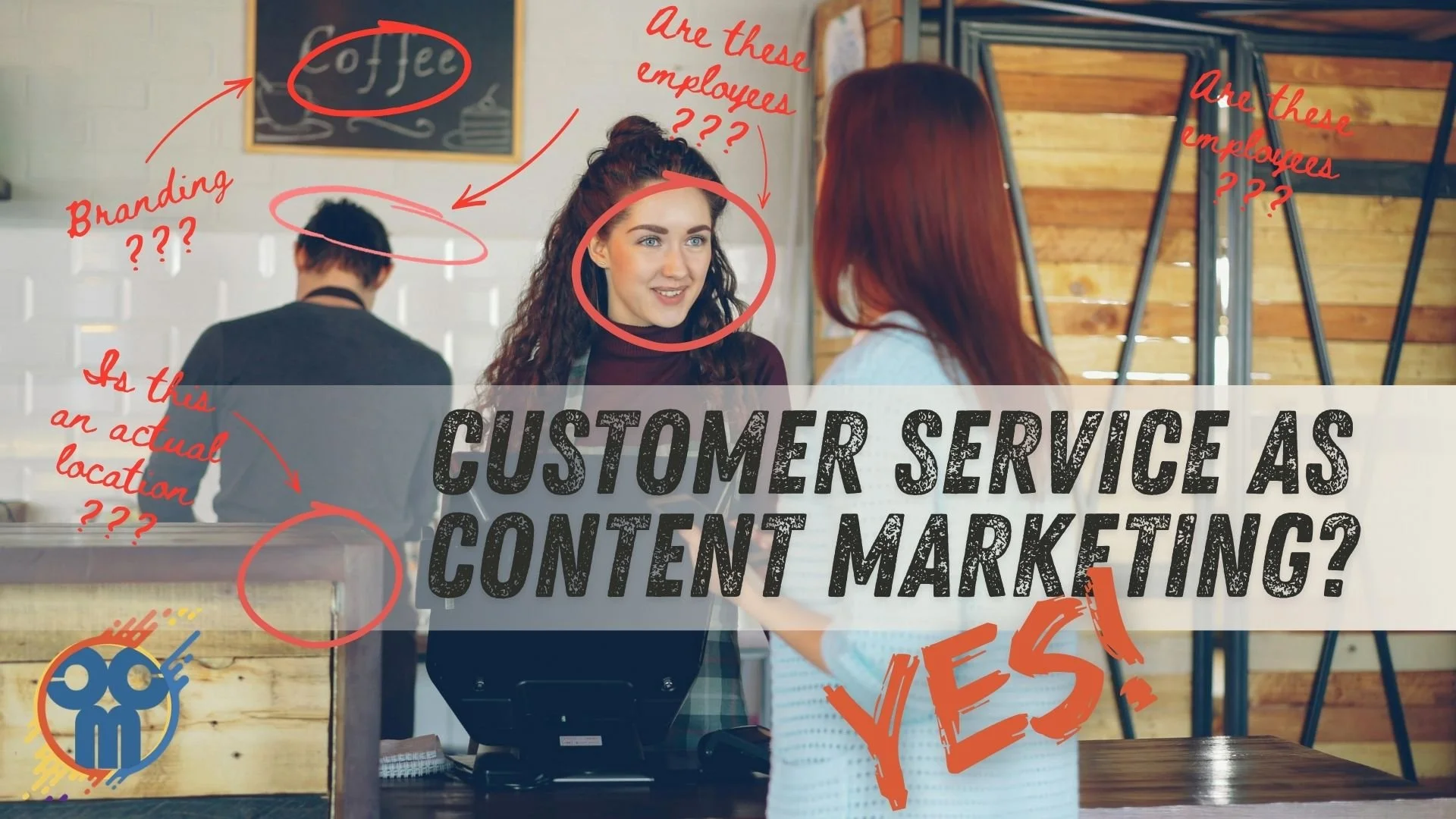
If you thought your customer service experience stopped with “How may I help you today?” and “My pleasure”, you may be missing a broader piece of your content marketing strategy.
Back in the day, “content marketing” simply meant SEO and blogging. And for good reason.
Older websites didn’t have many ways to dynamically update content without either adding new pages or sections or by reworking existing pages. The thing is…if your site is already complete, what the hell are you going to add that actually introduces value?
Some companies got around this by introducing tools like guides and reviews, but unless you were an e-commerce brand, it was kind of hard to continuously add new, valuable content month after month. And really, there are only so many guides and comparison infographics you can create before you’re creating content for the sake of content.
Enter: The Blog
The solution to this problem was the blog. While blogs were originally intended to be online diaries, they quickly became an adaptable resource for brand websites. You could now add new content to your site without taking away anything from the core experience, and the new content was cordoned off in its own separate area.
And Google took notice too. It began to look at website ranking the way you shop for a doctor: All things being equal, you want to go with the doc who has the most credentials, updated recently, and who engages in ongoing education to stay up to date on the latest news in their specific field of medicine.
Google applied this same framework to websites when determining rank. If a site had frequent updates with helpful, relevant content, then it had the chance to outrank a similar competitor with less helpful content because the site with a blog showed topical authority and fresh updates, among other things.

With AI in the mix, content marketing has evolved far beyond the traditional blog and now encompasses video, social, email, podcasts, and more.
AI Said Hold My Beer
As the web has grown increasingly complex, the value of blog posts hasn’t changed much, but the value of blog content has. Because anyone can spit out a blog post on virtually any topic under the sun these days using generative AI, the race is no longer to see who can produce the most content.
Instead, it’s to see who really has something to say. Meaning generic, “commodity content” no longer cuts it and is likely to get ignored by search engines and customers.
At Charlotte Content Marketing, we tell clients, “If AI can generate it, it’s not worth writing.” The reason we say this is because we’re looking for deeper content. Content that makes you (and search engines) say, “Oh! I didn’t know that.” In a nutshell: Content that has a unique perspective that can’t easily be synthesized by generative AI is more likely to add value to a site as long as it is relevant and helpful (and on brand.)
Connecting the Dots: Content Marketing Evolved
As all of this evolution was happening in content marketing, another change took place: the evolution of online search. Yes, Google is still far and away the king. But, it’s also not the only game in town, and Google knows this.
Social search, video search, searches on sites like Reddit…all of these different platforms represent a splintering in the search market. And these different search paths are used on top of traditional search competitors like Bing.
As a way to stay on top, Google decided to take all of these search channels and merge them into what we know as modern search. This is why you now see traditional search results alongside AI Overviews, video results, forum post results, social media results, and results from elsewhere on the web.

Great marketing is one thing, but brands have to deliver on customer service for an entire strategy to come together.
Back to the Task at Hand: Customer Service
We lay all of that out to demonstrate how content marketing has changed and why a Search Everywhere Optimization approach is necessary these days. But it’s also to draw a contrast between what some people consider “content marketing” and what content marketing actually is.
In fact, you may not realize this, but your customer service is also a form of content marketing. Why? Because the two are permanently intertwined.
Rolex Schmolex
Think about it like this: Rolex is a brand synonymous with high-end luxury. We’re talking watches that cost more than many people make in a year.
When you encounter content marketing from Rolex, it’s likely filled with images of people on yachts, enjoying luxury beach vacations, and driving expensive vehicles. They include beautiful people and places that just scream “high-end experience.”
Now, if you see all of those marketing assets for years and years, and you finally decide you’re going to get a Rolex, you’re going to expect the content marketing experience to transfer over to the in-person experience.

If you walked into a Rolex store and the experience didn’t match your perception, you’re likely going to remember that experience far more than a slick ad in the future.
When Reality Doesn’t Line Up
And let’s say you walk into the Rolex store in SouthPark Mall in Charlotte, and no one greets you, half of the overhead lights are flickering, the display case glass is all smudged, and you hear one of the counter representatives arguing loudly with a customer.
Wait a minute! This isn’t high-end. This feels like you’ve stepped into Discount Dave’s Watch Emporium (no offense if you’re a guy named Dave who actually owns a watch emporium.)
The Disconnect Affects Real-World Sales
And so, you are less likely to buy the watch, but more importantly, the Rolex brand is now tainted in your memory. And honestly, once a customer has had an experience like that, no amount of marketing or slick ads is going to win them back. To make matters worse, they’re going to share this experience with others online and in person.
Why? Because they had first-hand experience with the process. They now know that it’s all smoke and mirrors. The brand doesn’t live up to the hype.
Translating the Web Into the Real World
This is why it’s important to have your content marketing accurately reflect the customer experience and vice versa. At Charlotte Content Marketing, we always take the time to walk through the actual customer service experience before we ever draft a strategy.
We do this because without understanding how your business operates in the real world, we can’t shape perception. Sure, we can create narratives that you wish were true, but as demonstrated above, all of that falls apart if the in-person brand experience doesn’t align with what buyers see on the web.
As an added bonus of our approach, we often find that our clients are able to refine and sharpen aspects of their own processes. This happens naturally as marketing perception meets reality and as we identify areas where “on-paper” processes meet reality.

Utilize your customer service as a tool to build trust and authority in tandem with your content strategy.
Showcase Your Customer Service
Aside from the aforementioned alignment, customer service also plays a big role in content marketing through testimonials and reviews. This is why we often include Google Business Profile management in our partnerships with clients as a strong, maintained Google Business Profile is essential for local Search EVERYWHERE Optimization.
This tool is free and provided by Google directly, allowing customers to leave reviews for you to showcase. When you can highlight actual testimonials from real customers, you’re doing a few important things:
Building Trust
Trust is more important than ever in the world of content marketing. With AI able to spit out quick flyers and bot farms able to flood social media with engagement, buyers are looking for real trust signals before they make purchases.
When you’re able to show actual data from real customers expressing support for your brand, it tilts the odds in your favor.
Humanizing Your Brand
Another benefit of showcasing customer service testimonials is that it humanizes your brand. You can create all of the content you want featuring the founder of the company or interviews with brand executives, but actual stories from real people are different. They tell stories that founders can’t tell, and they bridge the gap between your selective highlights and real emotion from someone with whom a buyer can identify.
Beating AI
Lastly, highlighting testimonials, especially in video format, can beat AI almost every single time. While AI can certainly create fake testimonials, it can’t replicate real, actual people on screen talking about their direct experiences.
Featuring video testimonials about the brand experience from actual customers has the potential to signal to search algorithms that your brand is trusted and possesses authority in your industry.

Having a cohesive brand is the first step toward establishing great customer service and a solid content marking strategy.
It All Ties Back to Your Branding
Going back to the Rolex example above, remember that the key to successfully merging the customer service experience with your content marketing strategy is to have a clear understanding of your brand.
At Charlotte Content Marketing, we recognize that not every organization has a completely clear foundation to build off of in terms of branding, and some business leaders are still evolving their businesses practices. You may be great at what you do, but you and your team may have never taken the time to codify what makes your business great.
Without a branding and messaging guide, you’re more likely to produce disjointed results when it comes to developing consistent content and devising strategies. At Charlotte Content Marketing, we take the time to develop these resources through in-depth subject matter expert interviews with your team, reviews of your current marketing systems, and a thorough analysis of your previous marketing efforts.
These steps help us to drill down to the core of what makes your brand stand out, and we use these assets as a foundation for all content marketing strategies going forward to position our clients in front of the right audiences. In turn, this helps to ensure your customer service experience, communications, and public image are all in alignment to support your goals.
Let’s Make Sure Your Strategy is Aligned in the Charlotte Region
If you’ve found that it’s tough to get your customer service experience aligned with your content marketing strategy, we’d like to have a conversation. Contact Charlotte Content Marketing online, or call (704) 323-6762 to schedule a conversation.
